Dental Suite treatment guide

Missing Teeth: A Guide to Dentures and Dental Bridges

Missing one tooth, several teeth or all your teeth? Learn how dentures and bridges work, what they cost and what to expect during treatment.

  • Dental examination before treatment
  • Typically 2–3 visits, depending on your case
  • 4.9★ Google review*
  • Trusted by 30,000+ patients*
  • 5 clinics in KL & Selangor

*Across all 5 Dental Suite clinics.

Smiling woman in a hijab at a Dental Suite clinic (illustrative photo).
Illustrative photo

Losing a tooth can affect more than just your smile.

You might find it harder to chew certain foods, notice changes in the way you speak or feel uncomfortable smiling when a gap is visible.

Whether you've lost one tooth, several teeth or all your teeth, there are different ways to replace them.

At Dental Suite, we offer removable dentures and fixed dental bridges. Both are designed to replace missing teeth, but they work differently and suit different situations.

This guide explains your options, how much treatment costs, what happens during your appointments and how to care for your replacement teeth.

Guide

What Happens If You Don't Replace a Missing Tooth?

Not every missing tooth needs to be replaced immediately. However, leaving a gap can sometimes lead to changes in your mouth over time.

For example:

  • Neighbouring teeth may shift. Teeth beside the gap can gradually lean or move towards the empty space.
  • Your bite may change. A tooth opposite the gap may move further into the space.
  • Chewing may feel different. You might begin relying more heavily on one side of your mouth.
  • Jawbone changes can occur. The bone that previously supported the missing tooth can gradually shrink.
  • Your appearance or speech may be affected. This is particularly noticeable when front teeth are missing.

However, replacing a missing tooth is not always necessary. Some people can function comfortably with a stable bite despite having fewer teeth.

Your dentist will assess the location of the gap, the condition of your remaining teeth and your chewing function before recommending whether replacement is needed.

Guide

Dentures or Dental Bridges: What's the Difference?

At Dental Suite, there are two main treatment options for replacing missing teeth.

1. Removable Dentures

Dentures, commonly called gigi palsu, are replacement teeth attached to a base that fits inside your mouth.

You can remove them yourself for cleaning and, in most cases, before sleeping.

Dentures can replace:

  • One missing tooth.
  • Several missing teeth.
  • All teeth in the upper or lower jaw.

2. Fixed Dental Bridges

A dental bridge replaces missing teeth using an artificial tooth, or several artificial teeth, supported by neighbouring teeth.

Unlike removable dentures, a bridge is fixed in place and cannot be removed by the patient.

A conventional bridge typically uses crowns fitted over supporting teeth, although other bridge designs may be attached differently.

Does fixed mean permanent?

A fixed bridge stays in your mouth during everyday activities, but it does not last forever.

Like other dental restorations, it may eventually need maintenance, repair or replacement.

Explore Your Tooth Replacement Options

Answer four quick questions to explore the options your dentist may discuss with you.

  1. How many teeth are missing?
  2. Where are the missing teeth?
  3. What is the condition of the neighbouring teeth?
  4. Would you prefer fixed or removable replacement teeth?

This tool provides general information only. It does not assess your dental health or confirm which treatment is suitable.

Guide

Dentures (Gigi Palsu): Types, Materials and Prices

Dentures are custom-made to replace missing teeth and fit the shape of your mouth.

Your dentist will examine your gums, remaining teeth and bite before deciding which denture design may be suitable.

Partial Dentures vs Full Dentures

Partial dentures

A partial denture replaces one or several missing teeth when you still have natural teeth remaining.

Depending on the design, it may use small clasps or other components to help hold it in place.

Full dentures

A full denture replaces all the teeth in either the upper or lower jaw.

It rests on the gums and underlying tissues. Its stability depends on several factors, including the shape of the gums and jaw, the denture's fit, and the surrounding muscles.

Upper and lower full dentures may feel different because they do not have the same support and retention.

Types of Dentures at Dental Suite

Acrylic Dentures

Acrylic dentures use a gum-coloured plastic base that holds the replacement teeth.

They can be made as partial or full dentures, depending on your needs.

Acrylic dentures can often be adjusted, repaired or modified when appropriate.

Base price: RM400 per jaw, plus RM50 per tooth.

Flexible Dentures (Valplast)

Flexible dentures use a nylon-based material designed to fit around the gums and remaining teeth.

Their clasps can be gum-coloured, making them less noticeable than some metal clasps.

They are generally used for partial dentures. Certain repairs or modifications can be more difficult than with acrylic dentures.

Base price: RM900 per jaw, plus RM50 per tooth.

Cobalt-Chrome Dentures

These dentures use a metal framework to support the replacement teeth.

The framework can be relatively thin and rigid, which may make the denture feel less bulky for some patients.

Cobalt-chrome dentures are generally used when some natural teeth remain to support a partial denture.

Base price: RM900 per jaw, plus RM50 per tooth.

The most suitable material depends on your oral health, remaining teeth, the number of teeth being replaced and the design required.

Guide

How Much Do Dentures Cost at Dental Suite?

Denture pricing is calculated using two components:

Denture base price + RM50 per replacement tooth

The base price is charged for each jaw, whether upper or lower.

Denture MaterialBase Price per JawAdditional Cost
AcrylicRM400RM50 per tooth
Flexible (Valplast)RM900RM50 per tooth
Cobalt chromeRM900RM50 per tooth

Examples of Denture Prices

Example 1: One-tooth acrylic denture

RM400 base + RM50 for one tooth

Estimated total: RM450

Example 2: Two-tooth flexible denture

RM900 base + RM100 for two teeth

Estimated total: RM1,000

Example 3: Three-tooth cobalt-chrome denture

RM900 base + RM150 for three teeth

Estimated total: RM1,050

What About Full Dentures?

A full denture replaces all the teeth in one jaw.

The total price depends on the number of replacement teeth and the denture design.

Full acrylic denture estimate: RM400 base + RM700 for 14 teeth = RM1,100 per jaw

The dentist will provide a quotation following your examination.

Estimate Your Denture Cost

Denture material
1
Estimated totalRM450

This is a price estimate, not a treatment recommendation. The final fee and suitable denture design will be confirmed after a dental examination.

Guide

Dental Bridges: A Fixed Option for Missing Teeth

A dental bridge is a fixed restoration designed to replace one or more missing teeth.

It usually consists of an artificial tooth, called a pontic, supported by neighbouring teeth.

Because the bridge is fixed in place, you do not take it out to clean it. Instead, you clean around and underneath it as part of your daily oral hygiene routine.

How Does a Dental Bridge Work?

With a conventional bridge, the dentist prepares the supporting teeth on either side of the gap so crowns can be fitted over them.

These crowns are connected to the artificial tooth that fills the space.

What Supports a Dental Bridge?
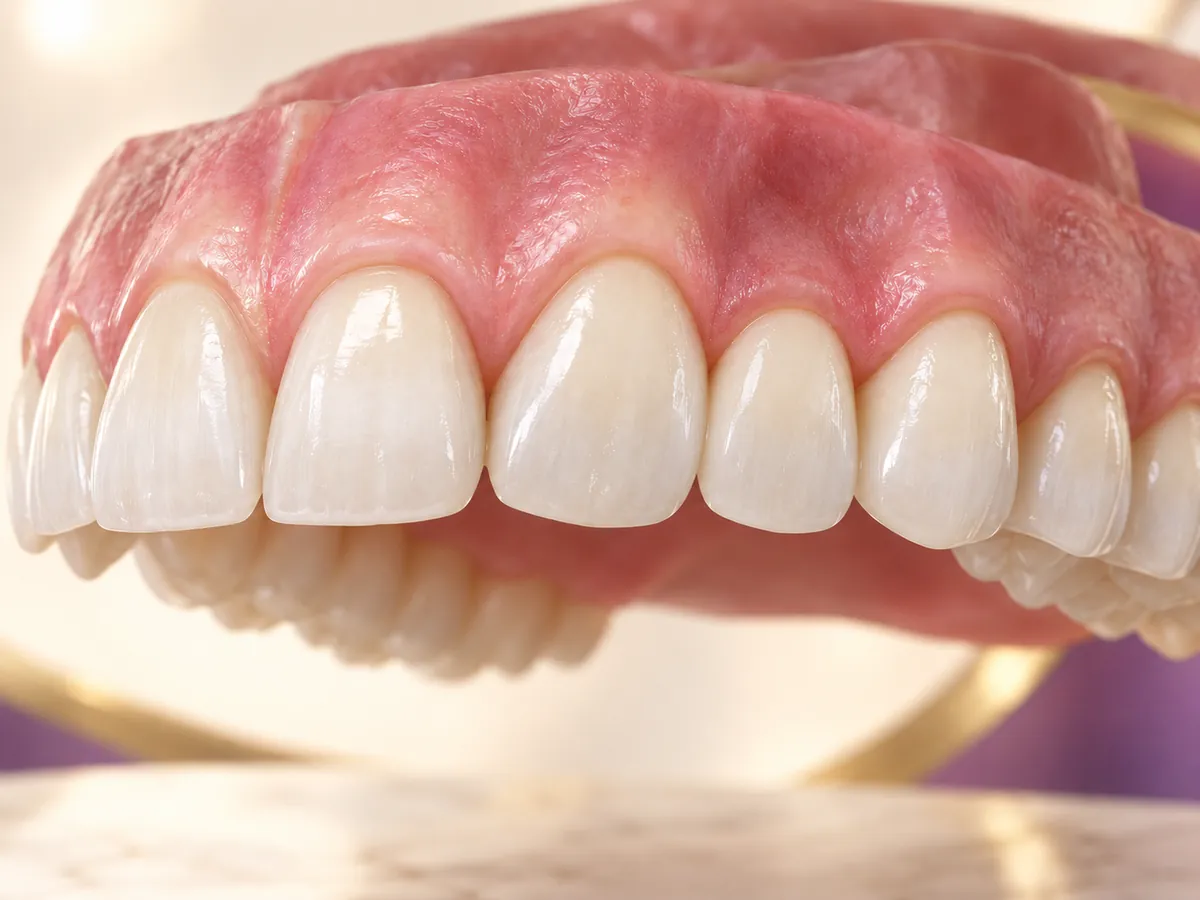
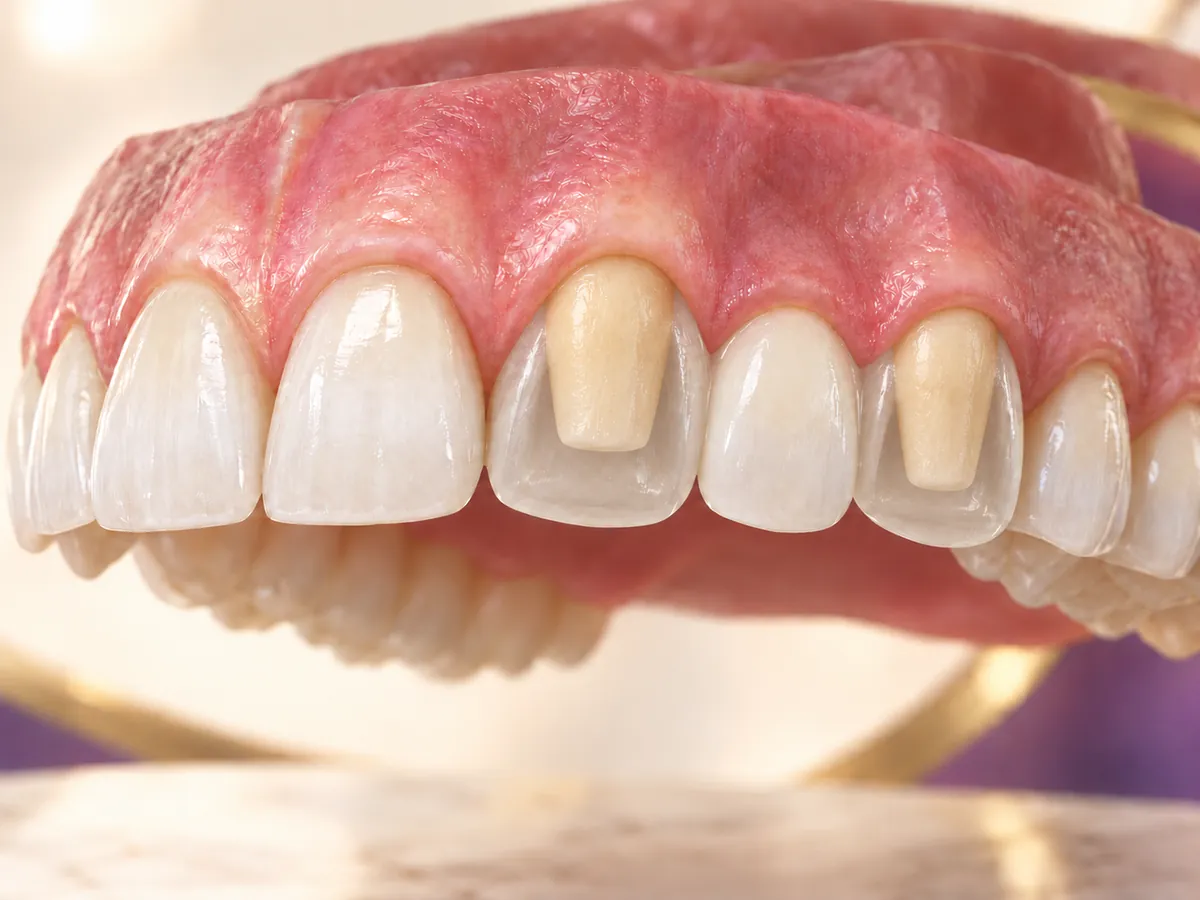
Illustration of a finished three-unit bridgeIllustration showing the shaped supporting teeth under the bridge crowns123
  • 1Crown covering a prepared supporting tooth
  • 2Artificial tooth (pontic) that fills the gap
  • 3Crown covering a prepared supporting tooth

Illustration of a conventional three-unit dental bridge.

Other designs, such as certain resin-bonded or fibre-reinforced bridges, may use adhesive attachments instead of full crowns.

The appropriate design depends on the position of the gap, the condition of the supporting teeth and the forces involved when you bite.

For more information about crowns, read our Dental Crowns Guide.

Types and Prices of Dental Bridges

Dental Suite offers several bridge materials.

MaterialPrice per Unit
Fibre-reinforced composite (FRC)RM700–RM1,000
Porcelain fused to metal (PFM)RM900–RM1,400
ZirconiaRM1,400–RM1,800
E-maxRM1,800–RM2,200
Learn About Each Material

Fibre-Reinforced Composite (FRC)

FRC bridges use tooth-coloured composite reinforced with fibres.

Depending on the design, some FRC bridges may preserve more of the neighbouring tooth structure than conventional crown-supported bridges.

However, their suitability depends on the location of the missing tooth, the bite and the available supporting teeth.

FRC bridges are commonly considered for replacing a single missing tooth. They may not be suitable for patients with heavy biting forces or habits such as clenching or grinding their teeth.

Porcelain Fused to Metal (PFM)

PFM bridges have a metal framework covered with tooth-coloured porcelain.

They combine metal support with a tooth-coloured outer surface, although the underlying metal may occasionally become visible near the gumline.

Zirconia

Zirconia is a strong, tooth-coloured ceramic material that does not contain a metal framework.

It can be used for selected fixed bridges, depending on the clinical requirements.

E-max

E-max is a glass-ceramic material known for its tooth-like appearance and translucency.

Its use in bridges depends on the size and location of the restoration, the forces involved and the manufacturer's clinical indications.

E-max may be suitable for selected short-span bridges, particularly towards the front or premolar region. Suitability depends on the bridge design, material specifications and biting forces.

How Is the Price of a Bridge Calculated?

Bridge pricing is based on the number of units and the material used.

For a typical conventional bridge replacing one missing tooth, the design may involve three units:

  • One artificial tooth to fill the gap.
  • Two crowns supporting the bridge.

For example, a three-unit PFM bridge would cost approximately:

3 × RM900–RM1,400 = RM2,700–RM4,200

This is an illustration of a conventional three-unit bridge, not a quotation.

Important: Not every bridge uses three units. Fibre-reinforced and resin-bonded designs may have different supporting structures and pricing arrangements.

Your dentist will confirm the design and cost after examining your teeth.

When Might a Bridge Not Be Suitable?

A bridge may be unsuitable or require additional consideration if:

  • The neighbouring teeth cannot provide sufficient support.
  • There is untreated tooth decay or gum disease.
  • The gap is too long for the proposed design.
  • Your bite places excessive force on the bridge.
  • You prefer not to have healthy supporting teeth prepared for crowns.

In these situations, your dentist may discuss a removable partial denture or other treatment options.


Guide

Dental Bridge vs Denture: Which Should You Choose?

Neither option is suitable for everyone.

A denture can be removed for cleaning and may replace teeth in several different areas of the mouth.

A bridge remains fixed in place but requires suitable supporting teeth and careful daily cleaning.

The right choice depends on:

  • How many teeth are missing.
  • Where the gaps are located.
  • The condition of the surrounding teeth and gums.
  • Your bite and chewing needs.
  • Whether you prefer a fixed or removable restoration.
  • Your treatment budget and preferences.

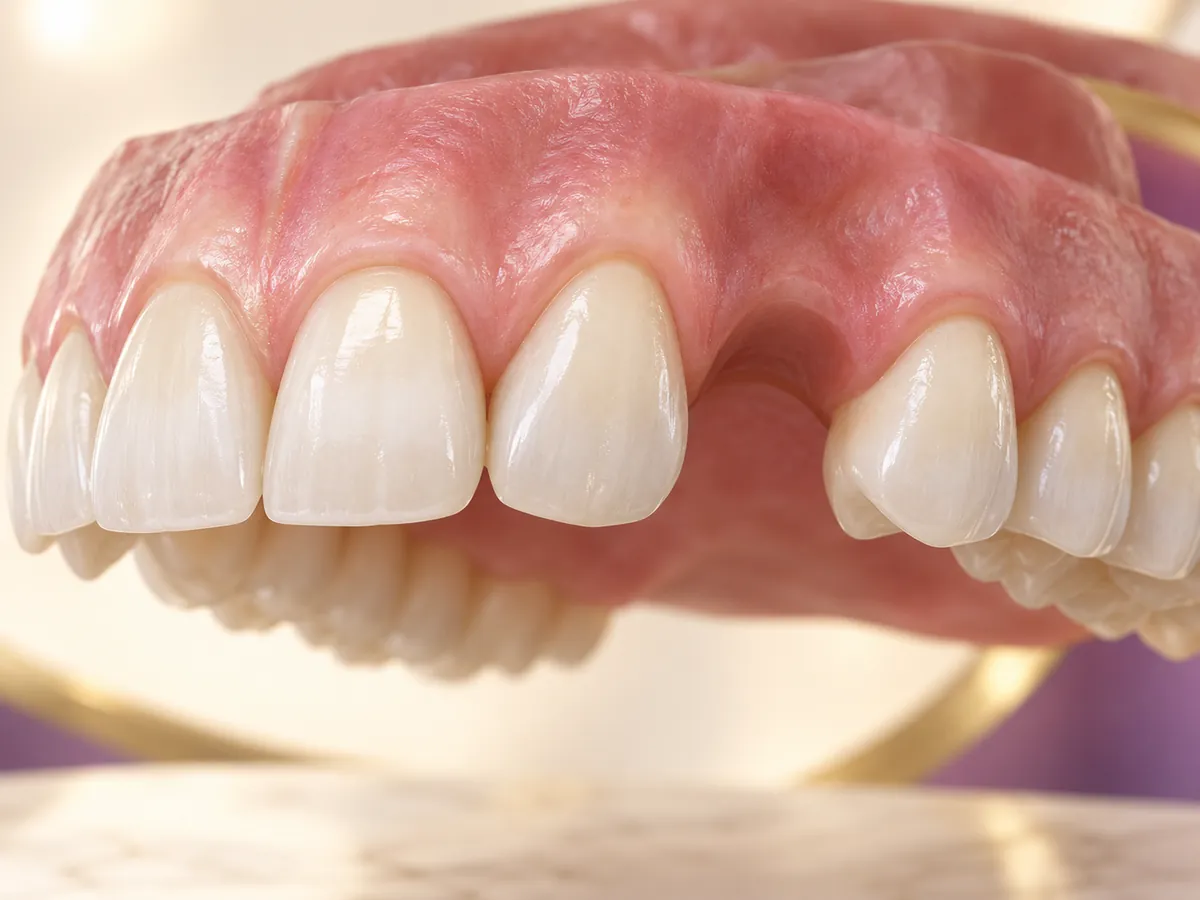
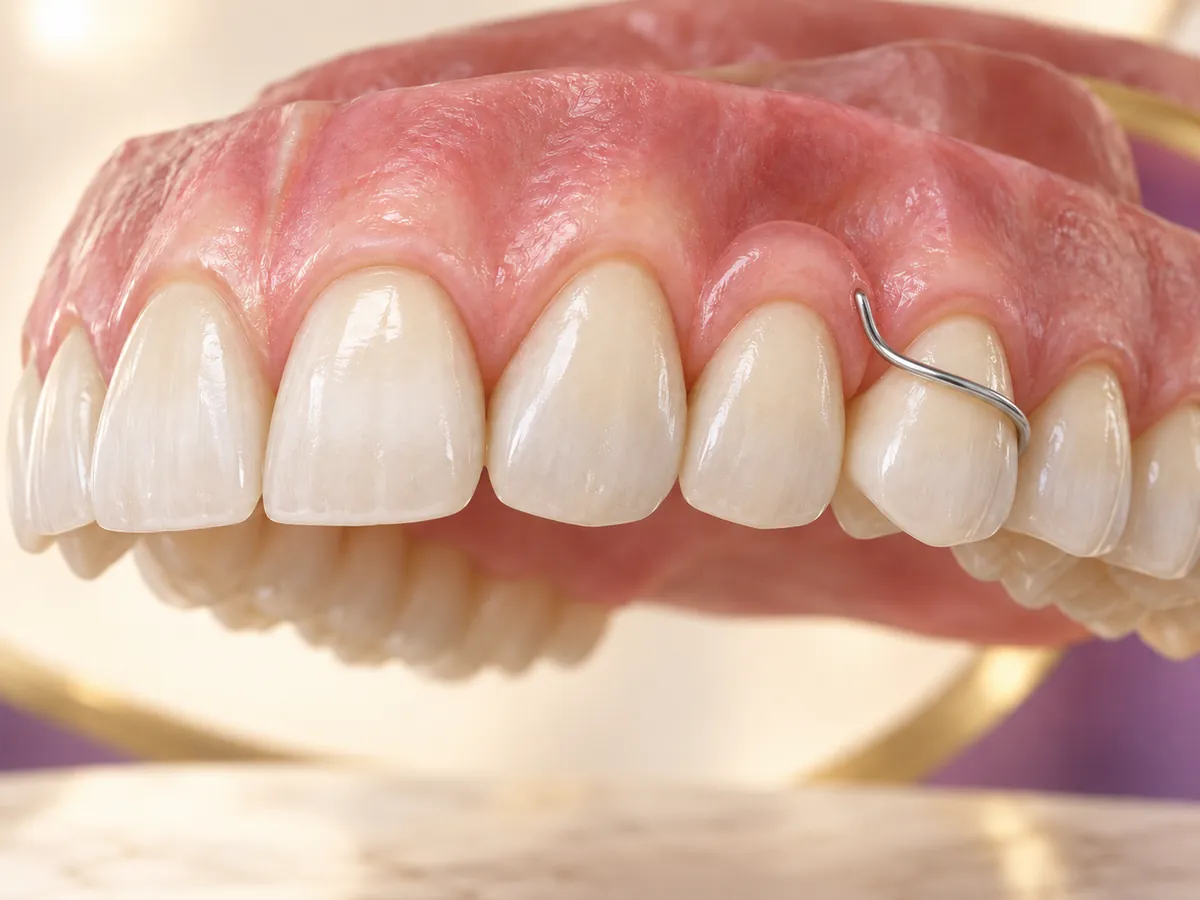
See How a Missing Tooth Can Be Replaced

Illustration of upper teeth with one missing front toothIllustration of the gap filled by a dental bridgeIllustration of the gap filled by a partial denture

Illustration only. Not a patient result or a prediction of your outcome.

Dental Bridge vs Removable Denture

FeatureDental BridgeRemovable Denture
Fixed or removableFixed in placeRemovable
Supporting teethUsually requiredDepends on design
Tooth preparationVaries by bridge typeUsually less preparation
CleaningClean around and underneath dailyRemove and clean daily
Teeth replacedDepends on support and designOne, several or all
AppointmentsUsually 2–3Usually 2–3
Starting priceFrom RM700 per unit (FRC)From RM450 for one acrylic tooth

Bridge and denture prices are calculated differently. A bridge may require several units, while denture prices include a base and replacement teeth. Your dentist will confirm the total cost after examination.

Your dentist will explain which options are clinically appropriate after an examination.

Guide

What About Dental Implants?

Dental implants are another method of replacing missing teeth.

An implant is placed into the jawbone and can be used to support a crown, bridge or denture.

Unlike conventional tooth-supported bridges, implants do not generally require neighbouring teeth to be prepared for support.

However, implant treatment involves surgery and requires an assessment of the bone, gums and general health.

Dental Suite does not currently offer dental implant treatment.

Our dentists can explain the dentures and bridges available at Dental Suite and discuss the options that may suit your situation.

Guide

How Long Does It Take to Get Dentures or a Bridge?

At Dental Suite, dentures and bridges are commonly planned over 2–3 appointments within approximately two weeks.

This is an estimate for suitable cases and may vary according to the treatment required.

  1. Step 1: Dental Examination and Treatment Planning

    Your dentist examines your teeth, gums, bite and the area where teeth are missing.

    X-rays may be taken when necessary.

    The dentist will then explain your options, the proposed treatment and the estimated fees.

  2. Step 2: Impressions and Preparation

    An impression or digital scan may be taken to record the shape of your teeth and gums.

    For a conventional bridge, the supporting teeth are usually prepared before the final impression or scan.

    A temporary restoration may be provided when appropriate.

    For dentures, the records are used to design a denture that fits your mouth.

  3. Step 3: Try-In and Fitting

    Your dentist checks the fit, bite and appearance of the restoration.

    Dentures may require a try-in appointment before the final denture is completed.

    When the bridge or denture is ready, it is fitted and checked for comfort and function.

  4. Step 4: Adjustments and Follow-Up

    Small adjustments may be necessary, particularly when adapting to a new denture.

    Your dentist will explain how to clean and care for the restoration.

    If it feels uncomfortable, loose or painful, contact the clinic for an assessment.

What If You've Just Had a Tooth Extracted?

After an extraction, the gums and underlying bone need time to heal and change shape.

The appropriate timing for a denture or bridge depends on the healing process, the type of replacement and the condition of the surrounding teeth.

If you have recently had a tooth extracted, your dentist may recommend allowing time for your gums and jawbone to heal before making a final restoration. For conventional dentures, this may involve waiting several months, sometimes around 3–6 months. The timing for a dental bridge may differ depending on the extraction site and treatment plan.

Some patients may be suitable for an immediate denture, which is made before extraction and fitted at the time the tooth is removed. These dentures often require adjustments as healing progresses.

Dental Suite does not currently provide immediate dentures, which are made before tooth extraction and fitted immediately afterwards. Your dentist will advise when a conventional denture can be made following extraction.

The dentist will advise when treatment can begin.

Guide

Living With Dentures: What Should You Expect?

Wearing a new denture can feel unfamiliar at first.

It may take several weeks to become comfortable eating, speaking and carrying out everyday activities while wearing it.

Getting Used to Your Dentures

During the first few weeks:

  • Your denture may feel slightly bulky.
  • You may produce more saliva than usual.
  • Certain words may feel unfamiliar when speaking.
  • Your gums may develop sore areas as you adjust.

Practising speaking or reading aloud may help.

If the denture causes persistent soreness, arrange a review. Your dentist may need to adjust its fit.

Eating With Dentures

Start with softer foods and gradually return to your usual diet as you become more comfortable.

It may help to:

  • Cut food into smaller pieces.
  • Chew slowly.
  • Use both sides of your mouth when possible.
  • Take care with very hard or sticky foods.

Can You Sleep With Dentures?

In most cases, dentures should be removed before sleeping to allow your gums to rest.

However, your dentist may give different instructions for specific situations, such as immediately after an extraction.

Always follow your dentist's advice.

How to Clean Your Dentures

Clean your dentures every day to remove food particles, plaque and stains.

  • Remove and rinse them after meals when practical.
  • Clean them using a denture brush or another cleaning method suitable for the material.
  • Avoid abrasive toothpaste that may scratch the denture.
  • Use a suitable denture-cleaning product according to its instructions.
  • Keep removable dentures appropriately moist when they are not being worn.
  • Avoid hot or boiling water that may damage the denture.
  • Continue cleaning your gums, tongue and remaining natural teeth.

Different denture materials can have different care requirements. Follow the instructions provided for your particular denture.

When Dentures Become Loose

Over time, the shape of your gums and jawbone may change.

This can cause dentures to become loose or uncomfortable.

Depending on the condition of the denture, it may need adjustment, relining or replacement.

Can Dental Suite Repair Dentures?

Denture repairs and relining are available at Dental Suite, with fees ranging from RM50 to RM500 depending on the work required. Your dentist will assess the denture before confirming the treatment and cost.

Repairs for dentures made elsewhere: Yes, Dental Suite also repairs dentures made at other clinics.

Do not attempt to repair a broken denture using household glue.

Guide

How to Care for a Dental Bridge

A bridge needs daily cleaning, just like natural teeth.

Although you cannot remove a fixed bridge, food and plaque may collect around its supporting teeth and underneath the artificial tooth.

To care for your bridge:

  • Brush your teeth twice a day using fluoride toothpaste.
  • Clean underneath the artificial tooth with a floss threader, suitable interdental brush or specialised floss.
  • Attend regular dental check-ups.
  • Contact your dentist if the bridge becomes loose, uncomfortable or damaged.

Good cleaning is particularly important around the teeth supporting the bridge.

Guide

Getting Dentures From a Dental Clinic or a Denture Shop

You may have heard the term kedai gigi palsu, which is sometimes used to describe businesses associated with making dentures.

It is important to distinguish between a dental laboratory that manufactures dentures and the clinical treatment involved in fitting them.

In Malaysia, clinical dental treatment must be provided by appropriately registered and authorised practitioners.

A qualified dental practitioner will examine your gums, remaining teeth, oral tissues and bite before recommending a denture.

This examination helps identify problems such as tooth decay, gum disease or unsuitable supporting teeth that may need treatment first.

When considering where to get dentures, check that your examination, treatment planning and fitting are carried out by an appropriately registered dental practitioner.

Guide

Payment Options at Dental Suite

Dental Suite offers payment options through:

  • Atome
  • Grab PayLater
  • SPayLater
  • Credit card instalment plans

Availability, eligibility and repayment terms depend on the payment provider and the selected plan.

Our team can explain the payment arrangements available for your proposed treatment.

Guide

Can You Get Dentures at a Government Dental Clinic?

Yes. Some government dental clinics in Malaysia provide denture services.

However, appointment arrangements, treatment availability and eligibility may vary between facilities.

Charges follow applicable government fee schedules.

If you are considering getting dentures at a government clinic, contact the facility directly to ask about the services offered, eligibility and appointment process.

FAQ

Frequently Asked Questions About Dentures and Bridges

How much do dentures cost at Dental Suite?

The acrylic denture base costs RM400 per jaw, while flexible (Valplast) and cobalt-chrome bases cost RM900 per jaw.

Each replacement tooth costs an additional RM50.

For example, an acrylic denture replacing one tooth costs RM450.

What does "gigi palsu kekal" mean?

This usually refers to a fixed tooth replacement, such as a dental bridge.

A bridge stays in place and cannot be removed by the patient.

However, fixed does not mean it will last forever.

How long does it take to make dentures or a bridge?

The usual estimate at Dental Suite is 2–3 appointments over approximately two weeks.

The actual timeline depends on your dental condition and the treatment required.

Can I sleep with my dentures?

Dentures are usually removed before sleeping, unless your dentist provides different instructions.

Are flexible dentures better than acrylic dentures?

Not necessarily.

Flexible dentures use a different material and may have less noticeable clasps.

Acrylic dentures are generally easier to modify or repair.

The suitable choice depends on your oral condition and how the denture needs to function.

How long do dentures last?

There is no fixed lifespan.

Over time, dentures can wear down and the shape of your gums and jawbone can change.

Your dentist will advise when adjustment, relining or replacement is needed.

Is a dental bridge permanent?

A bridge is fixed in place but may eventually require repair or replacement.

Its lifespan depends on several factors, including oral hygiene, the supporting teeth and your bite.

Does getting dentures or a bridge hurt?

For conventional bridges, the supporting teeth are generally prepared under local anaesthetic.

Dentures do not normally require the same type of tooth preparation, but new dentures may initially cause pressure or sore areas that require adjustment.

Your dentist will explain what to expect for your treatment.

Can you repair my existing dentures?

Dental Suite offers denture repairs ranging from RM50 to RM500, depending on the repair required.

The dentist will need to examine the denture to determine whether repair is possible.

Does Dental Suite offer dental implants?

No. Dental Suite does not currently offer implant treatment.

Our dentists can explain the removable dentures and fixed bridges available at our clinics.

Guide

Dentures and Dental Bridges Near You

Dental Suite offers denture and bridge services at its five clinics:

  • Setiawangsa
  • Setapak
  • Bandar Baru Bangi
  • Shah Alam
  • Subang Jaya (USJ)

You can contact our team to ask about tooth replacement options or arrange a dental examination at your preferred clinic.

Missing a Tooth? Start With a Dental Examination

Every person's teeth, gums and bite are different.

An examination helps your dentist explain which treatment options may be suitable, what they involve and how much they are likely to cost.

You don't need to decide between a denture and bridge before your first appointment.

Ask About Missing Teeth Clinics